






The Emotional Impact of a Cancer Diagnosis A cancer diagnosis can be an incredibly overwhelming and frightening experience, leaving individuals […]

Integrative cancer care combines conventional oncology with evidence-informed complementary options to support your wellbeing, comfort, and resilience. It focuses on helping you navigate treatment with more stability—physically, emotionally, and practically.
The aim is not to replace oncology care, but to support you alongside it through a personalised, safety-checked plan.
If you’re unsure what is appropriate for your situation, begin with a consultation so we can review your treatment plan, symptoms, medications and supplements, and safety considerations.
The focus is whole-person support: improving comfort, function, and resilience during and after treatment. Your plan is built around your treatment stage and your most important day-to-day priorities.
We prioritise what will make the biggest difference to your quality of life right now, then build from there. When treatment changes, your integrative plan should change with it.
Structure, clarity, and supportive planning alongside your oncology pathway.
Side-effect support and wellbeing strategies that fit your regimen and energy.
Recovery, energy, sleep, resilience—and clearer guidance on what is safe and useful.
Integrative cancer care works best when it is personalised, coordinated, and safety-checked. Here is the practical process.
We review your diagnosis context, current oncology plan, symptoms, medications and supplements, and your priorities. If you have oncology letters or recent results, bring them.
Your plan is modular. It may include nutrition guidance, mind-body support, and—where appropriate—complementary therapies that fit your treatment stage and safety profile.
With your permission, we can align timing and safety considerations with your oncology regimen and share relevant updates that support joined-up care.
Follow-ups are used to track your symptoms, tolerability, and treatment changes—then refine the plan as your needs evolve.
A good first step is a consultation focused on your current treatment, symptoms, and what you want to improve first. From there, we can build a realistic, safety-checked plan that fits your oncology timeline.
Some patients explore complementary therapies as part of supportive care. Any option should match your clinical context, goals, and safety profile.
Supportive care used in some integrative oncology settings alongside conventional treatment.
Intravenous nutrient support options considered with appropriate screening and timing.
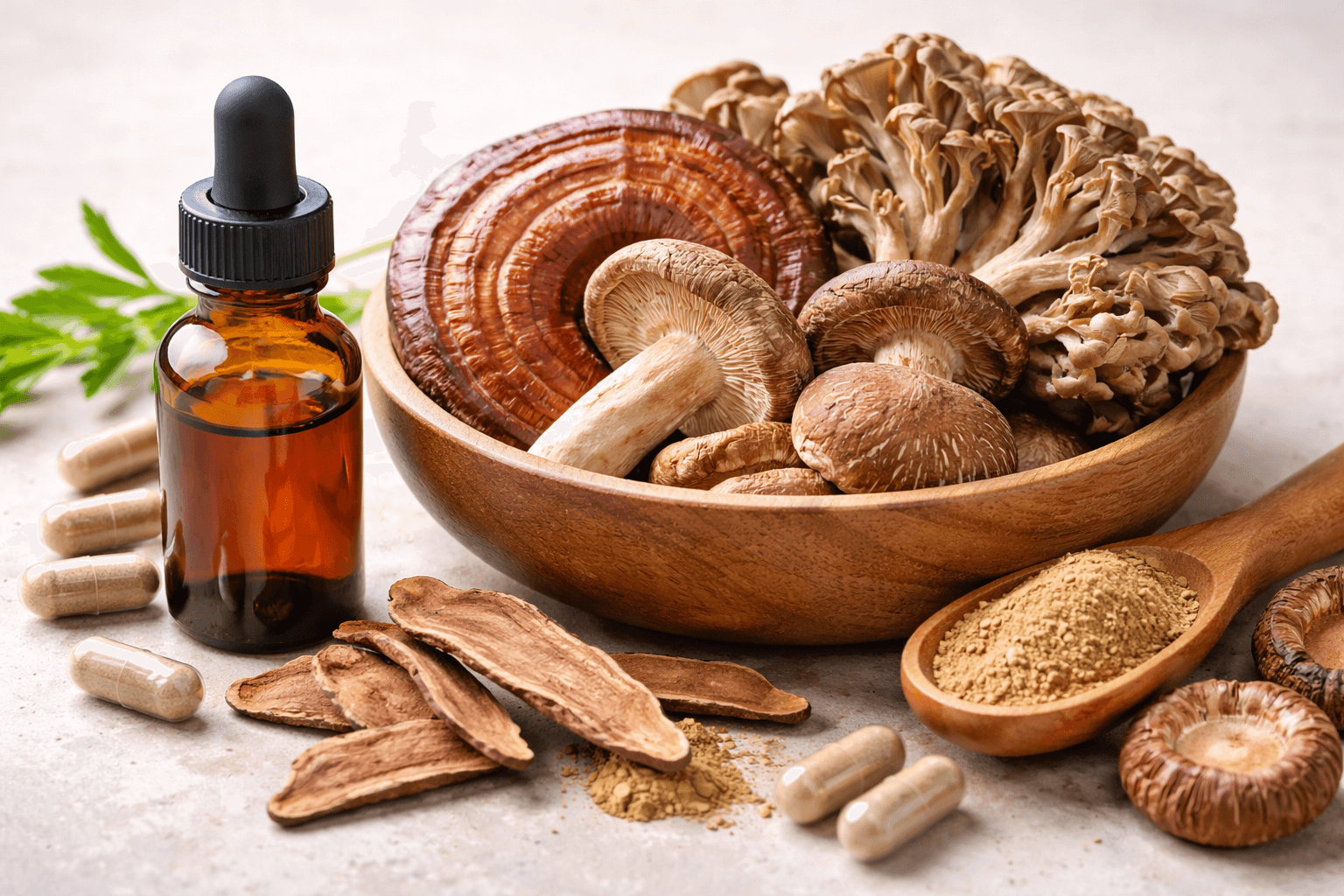
Some patients use mushroom extracts as part of supportive wellbeing strategies.
Food, hydration, and practical strategies to support tolerance and recovery.
Hypnotherapy and mind-body strategies to support coping, sleep, and stress resilience.
Safety and clarity matter in integrative cancer care. Supportive options should be assessed for interactions, contraindications, timing considerations, and your overall health context.
Integrative care is most helpful when it reduces confusion and supports joined-up decisions. With your consent, we can align recommendations with your oncology plan.
No. Integrative cancer care is intended to support you alongside conventional treatment, not replace it.
With your consent, coordination is possible so your care plan remains aligned and safety-checked.
Not always. Supplements and therapies can have interactions or timing issues. A clinician-led review helps reduce risk and confusion.
We review your current situation, priorities, medications and supplements, and create a practical plan. See what to expect →
The clinic is led by Dr Saskia H. Kloppenburg Vieth, a Consultant in General Internal Medicine with specialist training in complementary cancer care and additional training in mind-body methods and nutritional medicine.
The Emotional Impact of a Cancer Diagnosis A cancer diagnosis can be an incredibly overwhelming and frightening experience, leaving individuals […]
The possible ability of high doses of vitamin C to improve the treatment and prognosis of cancer patients is an […]
Vitamin C, an effective antioxidant, has been known to aid with various medical conditions. It may be especially beneficial for […]
What Is Vitamin Deficiency? Vitamin deficiency occurs when the body does not have enough of certain vitamins. This can happen […]
Increasing research is starting to show the myriad of anticancer properties, such as targeting vulnerabilities many cancer cells share, such […]